 Pooka
Pooka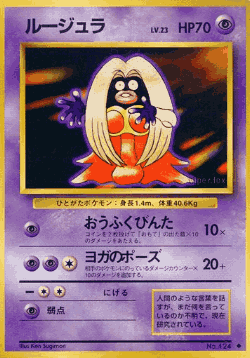

Cultural Censorship in the Pokémon TCG
Since 1996, the Pokémon Trading Card Game has navigated complex cultural differences between Japanese and Western markets. When Wizards of the Coast began localizing cards for English-speaking audiences in 1999, they discovered that certain artwork required modification or complete replacement.
A bit more than a handful of cards received censored or altered artwork for international release, covering controversies from racial sensitivity (Jynx) to religious symbols (Koga's Ninja Trick), gambling imagery (Arcade Game), and suggestive content (Misty's Tears). This guide examines each censorship case with side-by-side comparisons.
Jynx: The Blackface Controversy
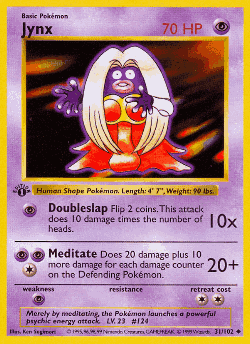
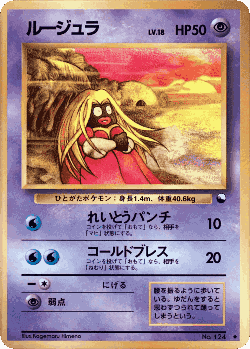
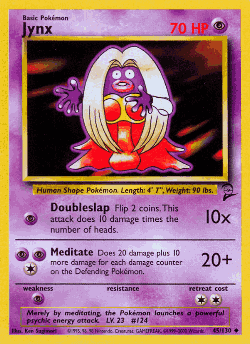
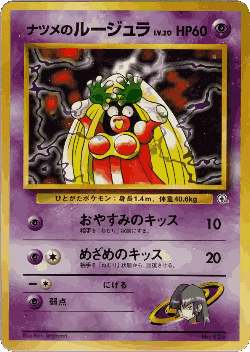
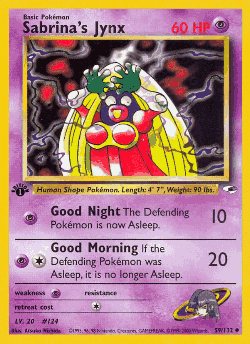
Jynx represents the most significant censorship in Pokémon TCG history, affecting five different card printings. The original design featured black skin that critics compared to racist "blackface" caricatures, specifically resembling the "Little Black Sambo" stereotype from early 20th-century children's books.
Wizards of the Coast proactively changed Jynx's coloring to purple for the Base Set English release in 1999, before public controversy erupted. Later printings in Base Set 2, Gym Heroes, Gym Challenge, and Legendary Collection all received the purple redesign. Interestingly, Neo Revelation's Jynx (released before Japan's own redesign in December 2001) featured the original black coloring in English.
Jynx Censored Cards
Jynx cards received purple skin redesigns to address racial sensitivity concerns.
Religious Symbols: Crosses and Manji
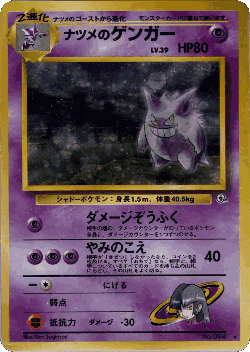
Two cards faced censorship due to religious imagery that concerned Western markets. Gengar from Gym Heroes featured cemetery crosses in the background, which were removed for the English release, though interestingly, the background wasn't completely redrawn, just simplified.
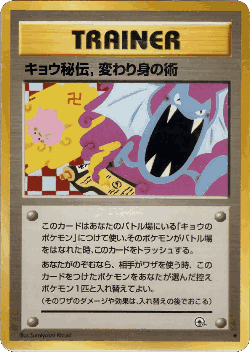
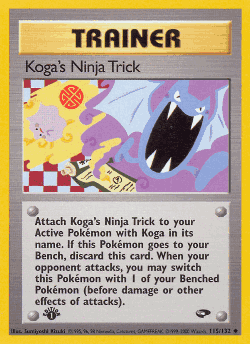
Koga's Ninja Trick from Gym Challenge contained a Buddhist "manji" symbol (卍) in the top right corner. While distinct from the Nazi swastika (opposite direction, includes dots, not rotated), Wizards of the Coast changed the artwork to avoid any potential confusion. Notably, Japan also adopted the censored version in later printings.
Religious Imagery Censorship
Cards featuring Christian crosses and Buddhist symbols that were altered internationally.

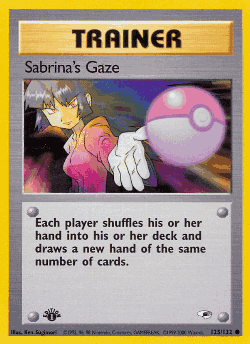
Sabrina's Gaze: Mysticism and Gestures
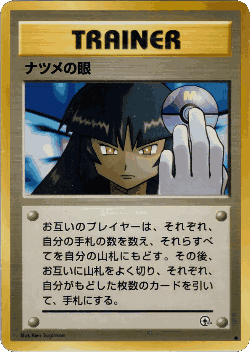
Sabrina's Gaze from Gym Heroes became the first card to receive completely redrawn artwork for English release. The original Japanese artwork showed Sabrina in a mystical pose with hand gestures that some interpreted as inappropriate, particularly her extended finger position that resembled giving "the bird."
While the gesture wasn't an actual middle finger, Wizards of the Coast deemed it close enough to cause concern among parents. The English version features entirely new artwork with Sabrina in a more neutral, family-friendly pose, removing any ambiguity about her hand gestures or mystical symbolism.
Sabrina's Gaze Complete Redesign
The first card to receive entirely new artwork for international audiences.
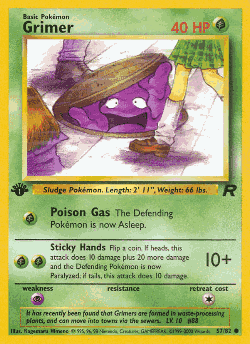
Grimer: The "Kogaru" Schoolgirl Reference
Team Rocket's Grimer features one of the most subtle yet controversial censorship cases. In the Japanese artwork, Grimer's eyes clearly look upward toward a schoolgirl wearing "loose socks," a fashion associated with "kogaru" (gyaru) subculture in 1990s Japan.
The implication that Grimer was looking up the girl's skirt was deemed inappropriate for children's products. The English version altered Grimer's gaze to look straight ahead, removing the suggestive element while keeping the schoolgirl in the background. Artist Kogemaru Himeno never publicly confirmed the intentional reference, but the change speaks for itself.
Grimer Eye Direction Change
Subtle but significant alteration to Grimer's gaze direction.

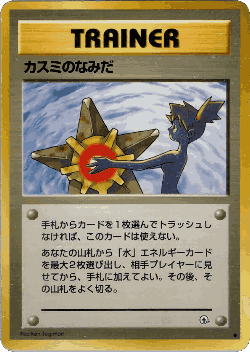
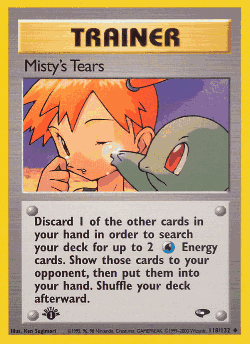
Misty's Tears: Nudity in Japanese Culture
Misty's Tears from Gym Challenge is perhaps the most famous "banned card" in Pokémon TCG history, though it was never actually banned from tournament play. The Japanese artwork depicts Misty completely nude (viewed from behind) while crying, reflecting Japan's more relaxed attitude toward cartoon nudity.
For the English release, the artwork was replaced with a close-up of Misty's face showing tears, eliminating the full-body nude depiction entirely. Despite persistent rumors, this card remains legal in all sanctioned tournaments and was printed in multiple languages. The controversy stems purely from cultural differences regarding appropriate content for children's products.
Misty's Tears: The Legendary "Banned" Card
Most famous censored card that was never actually banned from play.
Gambling References Removed
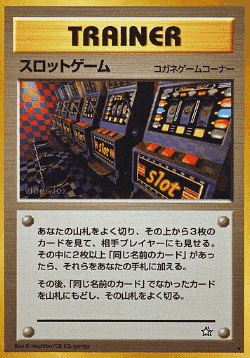
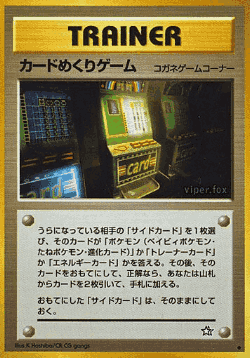
Following controversy over slot machines in Pokémon Red & Blue video games, Wizards of the Coast took a hard stance against gambling imagery in the TCG. Two Neo Genesis cards (Arcade Game and Card-Flip Game) received censored artwork for English release.
Arcade Game's Japanese name literally translated to "Slot Game" (スロットゲーム), which was changed to the more generic "Arcade Game" for English. The artwork was altered to remove explicit slot machine imagery. Card-Flip Game also received modified artwork to downplay gambling associations, reflecting Nintendo's broader effort to distance Pokémon from gambling themes in Western markets.
Gambling Imagery Censored
Neo Genesis trainer cards with slot machine and gambling references removed.


Moo-Moo Milk: Udderly Inappropriate
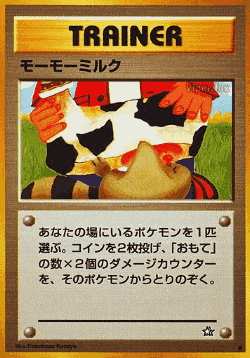
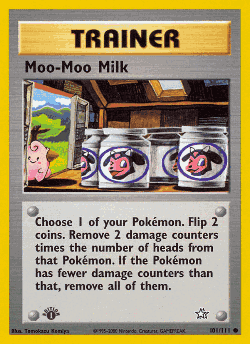
Neo Genesis's Moo-Moo Milk featured artwork showing a Sentret suckling on a synthetic Miltank udder, an image deemed too suggestive for international audiences. The implication of a Pokémon nursing from an artificial udder raised eyebrows at Wizards of the Coast.
The English release received completely different artwork showing Miltank with milk bottles, eliminating the nursing imagery entirely. Interestingly, when Japan reprinted Moo-Moo Milk in the Vs set, they chose to use the censored international artwork rather than their original version, suggesting even Japanese audiences found the original questionable in retrospect.
Moo-Moo Milk Redesign
Synthetic udder imagery replaced with family-friendly milk bottles.
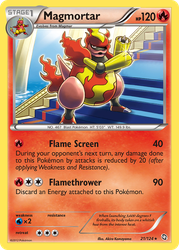
Magmortar: Gun Violence Concerns (2012)
While most censorship occurred in the Wizards of the Coast era (1999-2003), The Pokémon Company International continued the practice with Magmortar from Dragons Exalted in 2012. The original Japanese artwork depicted Magmortar's arm cannon in a pose strongly resembling a smoking gun after firing.
Sensitive to gun violence concerns in Western markets (particularly in the United States), the English artwork was altered to show Magmortar in a less weapon-like pose. This censorship parallels the Pokémon anime's decision to never air Episode 035 internationally due to the Safari Zone Warden wielding and pointing a gun throughout the episode.
Magmortar Gun Pose Censorship
Most recent artwork censorship addressing gun violence sensitivity.

Kadabra: The Uri Geller Lawsuit and Return
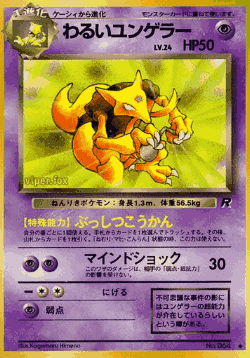
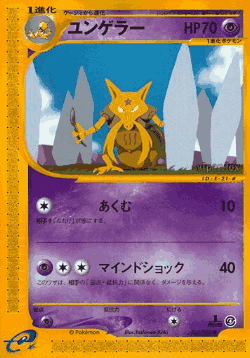
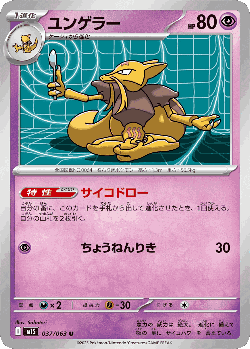
The most significant "ban" in Pokémon TCG history isn't due to artwork censorship but legal action. Uri Geller, famous Israeli-British illusionist known for spoon-bending performances, filed a lawsuit against Nintendo in 2000 claiming Kadabra was an unauthorized use of his identity.
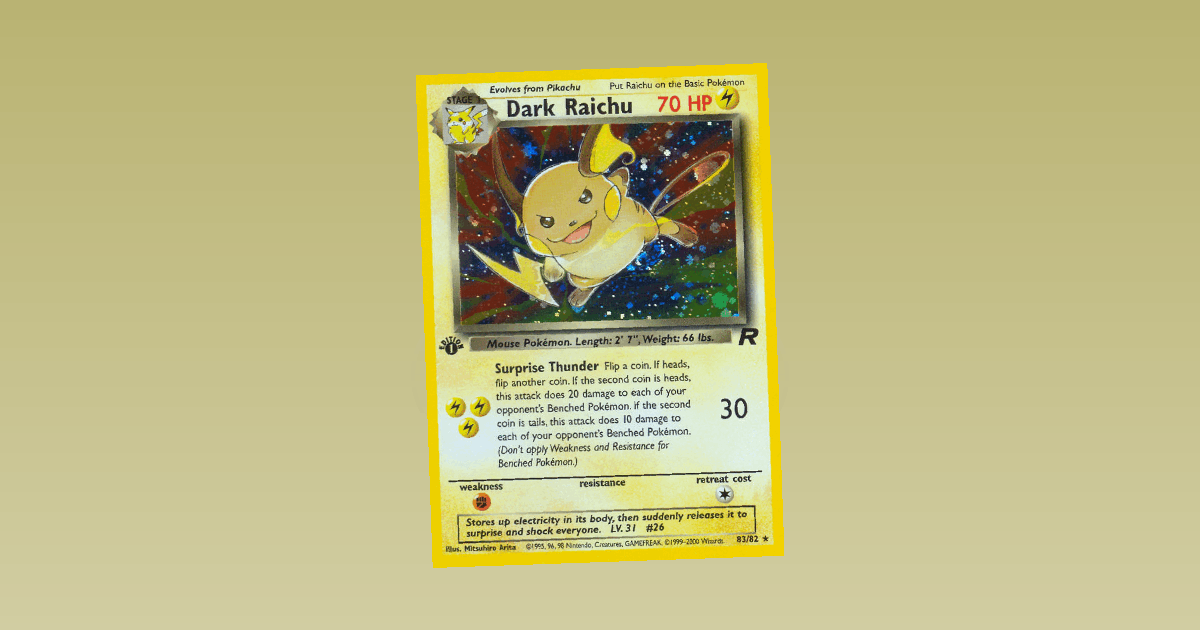
The evidence was compelling: Kadabra's Japanese name "ユンゲラー" (Yungerā) closely resembles Geller's name "ユリゲラー" (Yurigeerā), Kadabra wields a spoon as its signature trait, and the Dark Kadabra card from Team Rocket particularly offended Geller since "Dark" Pokémon are called "Evil" (わるい) in Japanese. From 2003 to 2023, no new Kadabra cards were printed: a 20-year absence unprecedented in TCG history.
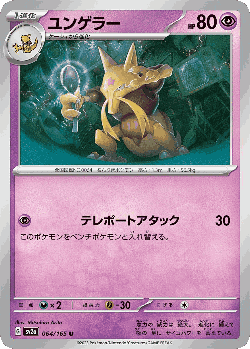
In 2020, Uri Geller publicly apologized and gave Nintendo permission to resume printing Kadabra cards. After a three-year delay, Kadabra finally returned in the Pokémon Card 151 set in 2023, ending the longest drought of any evolution-line Pokémon. New Kadabra cards have since appeared in multiple sets, reuniting Abra and Alakazam's evolution line after two decades.
Kadabra: 20-Year Absence and Triumphant Return
The Pokémon that disappeared from 2003-2023 due to legal issues, now finally back in print.
The Legacy of Censorship
These censored cards (plus Kadabra's 20-year legal ban from 2003-2023) represent flashpoints where Japanese and Western cultural norms collided. From racial sensitivity (Jynx) to religious symbols (crosses, manji), from suggestive content (Misty, Grimer, Moo-Moo Milk) to gambling concerns (Arcade Game), each case reveals what The Pokémon Company deemed acceptable for children's products in different markets.
Modern censorship continues at a subtler level: Full Art Trainer cards occasionally receive clothing adjustments, and certain card effects are reworded, but the dramatic complete redesigns of the Wizards of the Coast era remain unmatched. The resolution of the Kadabra lawsuit in 2020 and the card's 2023 return shows that even long-standing controversies can eventually be resolved.
For collectors, these censored cards offer a unique window into cultural differences, making Japanese original printings particularly valuable to those seeking "uncensored" artwork. Whether you view these changes as necessary cultural sensitivity or unnecessary prudishness, they remain a fascinating chapter in Pokémon TCG history: one where corporate caution met creative freedom, and caution usually won.