 Pooka
Pooka
The Card That Transcended the Game
In October 1996, CoroCoro Comic magazine in Japan announced a contest that would create the rarest treasure in Pokémon history. Young artists were invited to submit original Pokémon illustrations for a chance to win exclusive prizes. The grand prize wasn't money or merchandise: it was a card that certified the winner as an official Pokémon Card Illustrator, designed by Pikachu's original creator, Atsuko Nishida.
That card became Pokémon Illustrator. Over the following years, only 39 copies were ever awarded through CoroCoro's illustration contests. No retail release, no booster packs, no purchase option: only winners received this mythical card. Today, fewer than two dozen confirmed copies exist in gradable condition. In 2022, Logan Paul purchased a PSA 10 specimen for $5.275 million, wearing it in a protective case around his neck at WWE WrestleMania 38. The Pokémon Illustrator isn't just the most expensive Pokémon card: it's the most expensive trading card of any kind ever publicly sold.
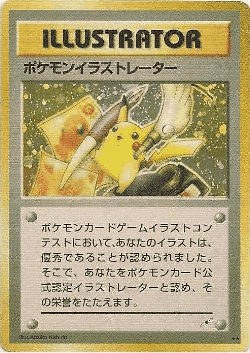
Pokémon Illustrator (CoroCoro Promo)
The holy grail of Pokémon cards: only 39 ever awarded, fewer than 24 known to exist.
The CoroCoro Comic Contests (1997-1998)
CoroCoro Comic, a monthly Japanese children's manga magazine, ran three official Pokémon Card Game illustration contests between 1997 and 1998. These weren't simple coloring contests: participants aged 15 and under submitted original artwork depicting Pokémon in creative scenarios. Judges from The Pokémon Company and Creatures Inc. evaluated thousands of entries for artistic merit, creativity, and understanding of Pokémon character design.
The winners of each contest received the Pokémon Illustrator card as certification of their achievement. The first contest launched in 1997, with subsequent contests in early and late 1998. Approximately 10-15 cards were awarded per contest, totaling around 39 copies distributed. The exact number has never been officially confirmed, adding to the card's mystique. What is certain: this was not a participation trophy. Winners had to demonstrate genuine artistic talent worthy of recognition by Pokémon's creators.
The card itself serves as a certificate. Its text reads: "We certify that your illustration is an excellent entry in the Pokémon Card Game Illust Contest. Therefore, we state that you are an Officially Authorized Pokémon Card Illustrator and admire your skill." This wasn't just a collectible: it was an honor, a recognition from The Pokémon Company that the holder possessed artistic abilities worthy of creating official Pokémon content. For the young winners, it was likely a career-defining moment.
Atsuko Nishida's Masterpiece: Pikachu Drawing Itself
The artwork was created by Atsuko Nishida, the legendary Game Freak designer who originally designed Pikachu for Pokémon Red & Green. The card depicts Pikachu sitting at a desk, holding a brush and painting its own portrait on canvas, meta-art celebrating the artistic process itself. Behind Pikachu are art supplies, reference sketches, and creative tools, positioning Pikachu not just as a Pokémon but as an artist creating Pokémon.
This self-referential concept is brilliant thematic design. The card certifies the holder as an illustrator, and the artwork shows Pikachu as an illustrator. It's Pokémon acknowledging that the franchise's success depends on artists: the illustrators who bring these creatures to life on cards, in games, in anime. By having Nishida (Pikachu's creator) draw Pikachu creating art, the card becomes a recursive celebration of creativity.
The card features unique characteristics that distinguish it from regular Pokémon cards. Instead of standard numbering, it displays the "Illustrator" designation in stylized text. The pen symbol replacing the normal set symbol indicates its special promotional status. The holographic treatment uses an early cosmos pattern, and the card stock quality differs from standard 1990s Japanese cards. These details make authentication critical: counterfeits exist due to the card's immense value.
The Population Report: How Many Exist?
Determining exactly how many Pokémon Illustrator cards exist is one of the hobby's greatest mysteries. The commonly cited number is 39 awarded, based on estimating 10-15 winners per contest across three contests. However, grading company records paint a grimmer picture of survival rates.
PSA has graded fewer than 20 Pokémon Illustrator cards total, with only six receiving PSA 10 grades, the highest possible. CGC and BGS have graded a handful more. Combined, perhaps 20-24 copies have surfaced for grading since 2000. This suggests many original copies were lost, destroyed, heavily played, or remain in private collections of the original winners who never entered the collecting market.
The PSA 10 population of six makes Illustrator exponentially rarer than other legendary cards. For comparison, PSA 10 Base Set Charizards number in the hundreds. Even the infamous Pikachu Trophy cards (awarded to tournament champions) have slightly higher populations. The Pokémon Illustrator stands alone at the apex of scarcity: combining ultra-low print run, age (1997-1998), lack of commercial distribution, and the reality that most winners were children who likely didn't preserve the cards in gem mint condition.
Logan Paul and the $5.3 Million WrestleMania Moment
On July 15, 2022, Logan Paul announced he had purchased a PSA 10 Pokémon Illustrator card for $5.275 million from Goldin Auctions, setting the record for the most expensive Pokémon card ever sold. The sale shattered the previous record of $900,000 for a PSA 9 copy in 2021. Logan, a controversial YouTuber-turned-boxer-turned-wrestler, had become obsessed with Pokémon collecting during the pandemic boom, previously spending millions on sealed product and high-end cards.
The cultural moment came at WWE WrestleMania 38 on April 3, 2022 (note: Paul announced the purchase in July but revealed he wore a replica at WrestleMania before finalizing the real purchase). Logan entered the ring wearing the Pokémon Illustrator in a custom protective case as a necklace, estimated to be insured for over $5 million. He lost his match against The Miz but won the internet: the image of Logan Paul in wrestling gear with the world's most expensive Pokémon card became instantly iconic.
Critics argued Logan turned a piece of TCG history into a publicity stunt. Supporters countered he brought unprecedented mainstream attention to Pokémon collecting, exposing millions of non-collectors to the hobby's high-end market. Regardless of perspective, Logan's purchase and WrestleMania appearance cemented Pokémon Illustrator in popular culture beyond the TCG community. It became a symbol of wealth, nostalgia, and the extreme values vintage Pokémon can command in 2020s collector markets.
Market History: From Unknown to $5.3 Million
For years after distribution, Pokémon Illustrator remained unknown outside Japan. Western collectors didn't even know it existed until the early 2000s when Japanese card databases began documenting promotional releases. Early sales were sporadic and poorly documented, a copy allegedly sold for $20,000-30,000 in the mid-2000s, though verification is difficult.
The modern market for Illustrator began around 2010 when serious vintage collectors started hunting the card. A PSA 9 copy sold for $54,970 in 2013. By 2016, prices had climbed to $100,000+ as the Pokémon GO boom reignited interest in vintage cards. In 2019, a PSA 7 specimen sold for $195,000. The 2020-2021 pandemic collecting explosion pushed prices into the stratosphere: a PSA 7 fetched $375,000 in 2020, followed by a PSA 9 reaching $900,000 in 2021.
Logan Paul's $5.275 million purchase in 2022 represented nearly a 6x increase from the 2021 record. While some analysts called it an overpay, others noted the PSA 10 population of only six justified premium pricing. Since Logan's purchase, no other PSA 10 has sold publicly, making it impossible to establish a current market price. Offers reportedly reach $7-10 million for PSA 10 specimens, but owners aren't selling. The card has transcended traditional market dynamics: it's no longer just a collectible but a cultural artifact whose value is almost theoretical.
Authentication and Counterfeits
Given values exceeding $5 million, Pokémon Illustrator counterfeits are sophisticated and numerous. Collectors must understand key authentication points. Genuine copies feature a specific cosmos holo pattern from the 1990s that's difficult to replicate perfectly. The card stock has a distinct thickness and texture from that era. The pen symbol replacing the set icon must be perfectly sized and positioned. Font sizing, particularly in the Japanese text, follows exact specifications.
The most reliable authentication is professional grading by PSA, CGC, or BGS. Even then, collectors should verify the certification number matches the grading company's database and examine holder security features. Given that fewer than 25 copies have ever been graded, a newly surfaced "ungraded" Illustrator should be met with extreme skepticism unless provenance traces back to an original contest winner.
Provenance is critical. Legitimate copies should have documentation connecting them to a contest winner or a verified chain of ownership. While not all current owners can prove this lineage (many winners were anonymous children in 1997-1998), major auction houses and dealers perform extensive due diligence before handling Illustrator cards. Any private sale without third-party authentication or auction house involvement carries substantial risk at these price points.
Museum Collaborations and Cultural Promos
While Pokémon Illustrator remains untouchable in value, it's worth examining other cards that share its "cultural artifact" status: promos that transcend typical collectibles by partnering with art institutions or celebrating artistic heritage. These cards prove that Pokémon TCG can create meaningful cultural moments beyond the game itself.
The Van Gogh Museum collaboration (2023) created Pikachu with Grey Felt Hat, mimicking van Gogh's self-portrait. While mass-distributed after initial chaos, it represents Pokémon's growing institutional legitimacy, partnering with one of the world's most prestigious museums. Similarly, the Munch Museum "Scream" promos (2018) reimagined Edvard Munch's iconic painting with Pokémon characters, blending fine art with pop culture in ways that echo Illustrator's artistic recognition theme.
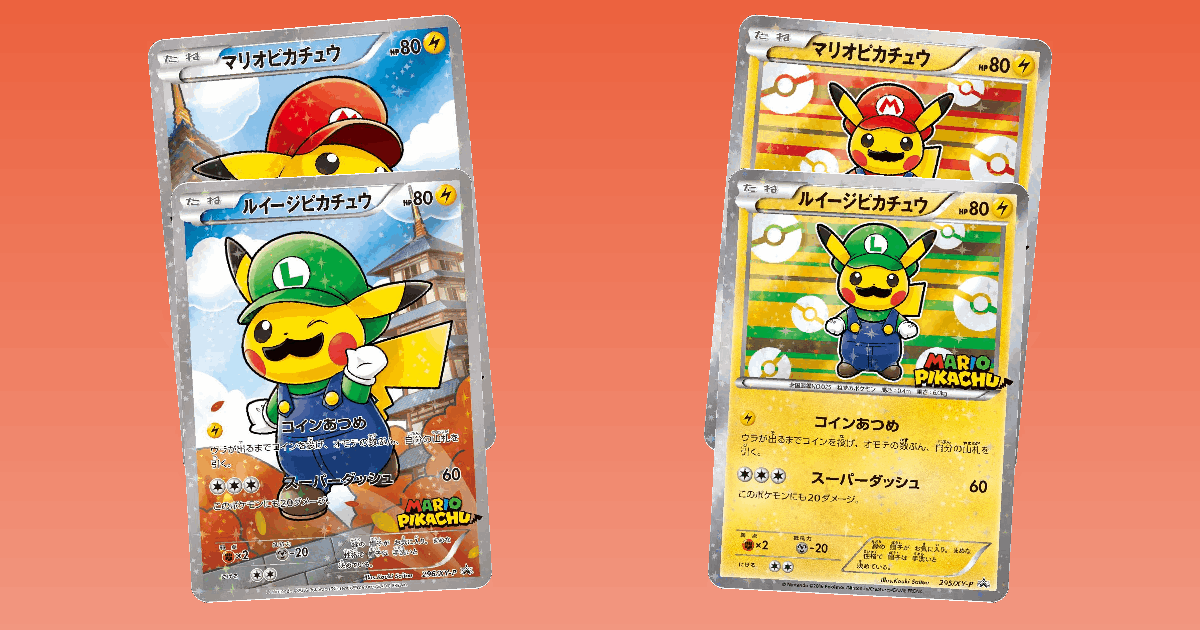
The Japan Post Stamp Box promos (2021) saw legendary artist Mitsuhiro Arita (creator of Base Set Charizard) illustrate Pikachu and Cramorant in traditional Ukiyo-e woodblock print style. These cards connect Pokémon to Japan's 17th-century art history, much like Illustrator connects to Atsuko Nishida's original Pikachu design. The Mario & Luigi Pikachu crossover cards (2013) celebrate Nintendo's broader creative universe, commanding $2,000-10,000+ despite being "just" promotional items. What unites these cards with Illustrator: they're not just game pieces; they're cultural statements, artistic collaborations, and museum-worthy artifacts that happen to be printed on cardboard.
Museum & Cultural Collaboration Cards
Promos that share Illustrator's cultural significance: art museum partnerships and heritage celebrations.
Why Illustrator Matters Beyond Its Price Tag
Pokémon Illustrator represents something deeper than extreme wealth or collecting obsession. It's a card that recognizes artists: the creators who bring Pokémon to life. In an industry driven by players, collectors, and investors, Illustrator says: "Artists matter. Creativity matters. The people who imagine these creatures deserve recognition." That message, certified by Pikachu's own creator, gives the card meaning beyond monetary value.
It also represents a time capsule of late-1990s Pokémon mania in Japan. The contest winners were children experiencing the first wave of Pokémania, submitting hand-drawn art to a manga magazine, winning recognition before the franchise became a global phenomenon. These kids couldn't have imagined their prize would one day sell for millions. The card connects modern collectors to that pure, early excitement when Pokémon was new and anything felt possible.
Finally, Illustrator proves that scarcity, story, and cultural significance create value beyond playability or even aesthetics. The card isn't particularly beautiful compared to modern alternate arts. It has no gameplay function (it's a Trainer with no effect, essentially a certificate). Yet it commands $5+ million because of what it represents: the rarest, most exclusive, most meaningful card in Pokémon history. It's the holy grail not because it's the best card, but because it's the most special.
Can You Ever Own One? (Probably Not)
For 99.99% of collectors, Pokémon Illustrator will never be obtainable. Even wealthy collectors with seven-figure card budgets face the reality that PSA 10 copies essentially don't circulate. The six PSA 10 holders include Logan Paul, at least two anonymous collectors who refuse sale offers, and possibly sealed estate holdings. Lower grades (PSA 7-9) appear at major auctions every few years but require $300,000-$2,000,000+ depending on grade and market conditions.
If you have unlimited resources and patience, the path involves: 1) Building relationships with major auction houses (Heritage, Goldin, PWCC) and dealers specializing in ultra-high-end Pokémon, 2) Being prepared to bid aggressively when listings appear (maybe once every 1-2 years), 3) Having $500,000-$5,000,000+ liquid capital ready to deploy, 4) Accepting you may wait years without an opportunity. Even then, success isn't guaranteed: high-profile buyers can outbid you, or the card simply may not appear.
For the rest of us, Pokémon Illustrator exists as aspiration and inspiration. It reminds us that the hobby has history, mythology, and treasures that transcend normal collecting. We may never own it, but knowing it exists (knowing that somewhere, the rarest Pokémon card in the world sits in a vault) adds magic to every pack we open, every card we collect, and every moment we spend enjoying this incredible hobby.
The Eternal Holy Grail
Pokémon Illustrator will always be the holy grail. No future card can replicate its combination of extreme scarcity (39 made, ~24 known), historical significance (first promo, artist recognition), and cultural moment (Logan Paul, WrestleMania). The Pokémon Company could print a million Charizards or create new ultra-rares, but they can't go back to 1997 and make more Illustrators. Time has sealed its legend.
The card serves as a benchmark for the entire hobby. When discussing any expensive Pokémon card, collectors say "expensive, but not Illustrator expensive." When validating the vintage market, dealers point to Illustrator as proof that Pokémon cards can be legitimate investments holding million-dollar values. When mainstream media covers Pokémon collecting, they lead with Illustrator because it's the story that transcends the hobby: art, rarity, youth nostalgia, and unfathomable prices converging into one card.
Twenty-eight years after the first contest winner received their copy, Pokémon Illustrator remains untouchable. It's not just the most expensive Pokémon card or the rarest Pokémon card: it's the card that defines what "legendary" means in TCG collecting. Future generations will discover Pokémon, fall in love with collecting, and eventually learn about the mythical card that started it all: Pokémon Illustrator, the card that certified artists, inspired collectors, and proved that sometimes, a piece of cardboard can be worth more than gold.
All cards in this guide
| Card | Set | Rarity | Released | |
|---|---|---|---|---|
 | Pokémon Illustrator #32 | Miscellaneous Promos | 1996 | |
 | Pikachu with Grey Felt Hat #85 | Scarlet & Violet Black Star Promos | Promo | 2023 |
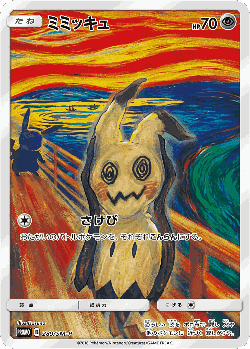 | Mimikyu #289 | Sun & Moon Promos | Promo | 2016 |
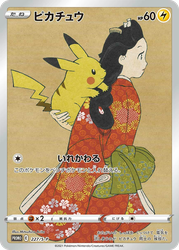 | Pikachu #227 | Sword & Shield Promos | Promo | 2019 |
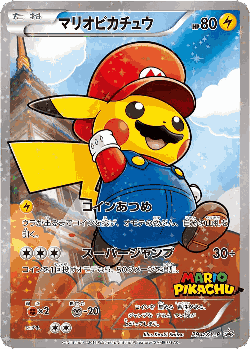 | Mario Pikachu #294 | XY Promos | Promo | 2013 |