 Pooka
Pooka
In Your Face
The artistic direction for Prime cards was bold and polarizing. Instead of full-body action shots, the illustrations zoomed in uncomfortably close to the Pokémon's face. Feraligatr bared its teeth, Tyranitar roared directly at the viewer, and Gengar grinned menacingly from inch-wide proximity.
This style was intended to emphasize the raw power and personality of these fully evolved Pokémon. The card borders were also unique, featuring a cracked, golden foil pattern that glimmered under light, distinguishing them from standard rare holographics.
Johto Starter Primes
The final evolutions of the Johto starters received the Prime treatment in the base HGSS set.
Power Creep Begins
Gameplay-wise, Pokémon Prime were powerful Stage 2 evolutions (mostly). They often had Abilities (called Poké-Powers or Poké-Bodies back then) that accelerated energy or disrupted the opponent. Unlike the EX cards that would follow in Black & White, Knocking Out a Prime card only took 1 Prize card, making them extremely efficient for trading resources.
Because they evolved from normal Pokémon, they fit naturally into decks without needing the complicated "Level Up" mechanic of the previous LV.X era.
Competitive Staples
Prime cards that defined the World Championship formats of the time.
Market Value
While not as expensive as Gold Stars or Shining Pokémon, Prime cards have seen a steady rise in value due to HGSS nostalgia. A Mint condition Feraligatr Prime or Tyranitar Prime can sell for $40-60, while the elusive Umbreon Prime and Espeon Prime from Undaunted command prices upwards of $150 due to the "Eeveelution tax."
The unique foil border is notoriously prone to scratching, making high-grade PSA 10 copies exceptionally rare relative to their population.
All cards in this guide
| Card | Set | Rarity | Released | |
|---|---|---|---|---|
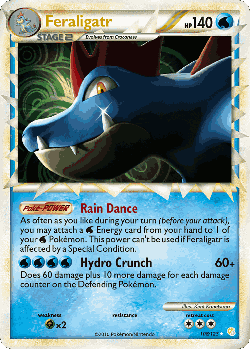 | Feraligatr #108 | HeartGold & SoulSilver | Rare Prime | 2010 |
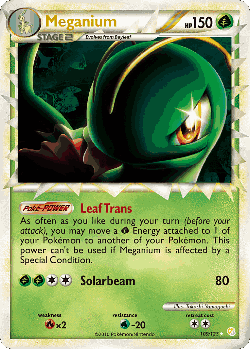 | Meganium #109 | HeartGold & SoulSilver | Rare Prime | 2010 |
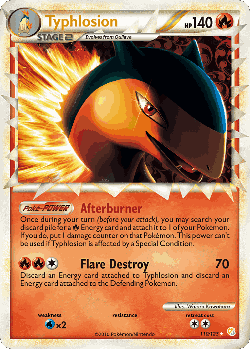 | Typhlosion #110 | HeartGold & SoulSilver | Rare Prime | 2010 |
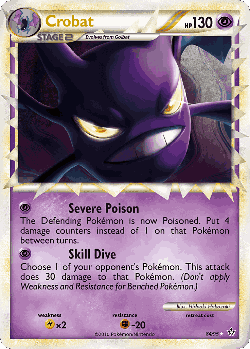 | Crobat #84 | HS—Unleashed | Rare Prime | 2010 |
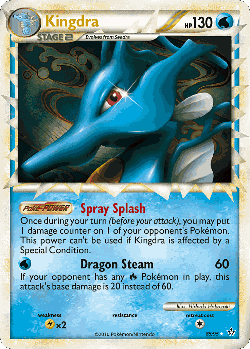 | Kingdra #85 | HS—Unleashed | Rare Prime | 2010 |