 Pooka
Pooka
Type Shift
The defining characteristic of Delta Species Pokémon was their unusual typing. A Charmander might be Electric-type instead of Fire. A Gardevoir might be Fire-type instead of Psychic. This opened up incredible deck-building possibilities, allowing players to utilize Type-based support cards in innovative ways.
The lore explanation was firmly rooted in the Holon region research facility. The radiation from the Holon Tower (depicted on various Stadium and Energy cards) altered the genetic makeup of Pokémon in the vicinity.
The Metal Mutation
Many Delta Species Pokémon gained the Metal typing, reflecting the artificial nature of the Holon incident.
Dual Typing Returns
Delta Species also marked a major return for Dual Typing in the TCG. Many fully evolved Delta Pokémon possessed two types, usually their original type plus Metal (or Lightning). This made them versatile attackers but also vulnerable to multiple weaknesses.
The "Holon" engine of Trainer and Energy cards (like Holon Transceiver and Holon Energy GL) supported these strange combinations, creating one of the most complex and beloved competitive formats in history.
Gold Star Deltas
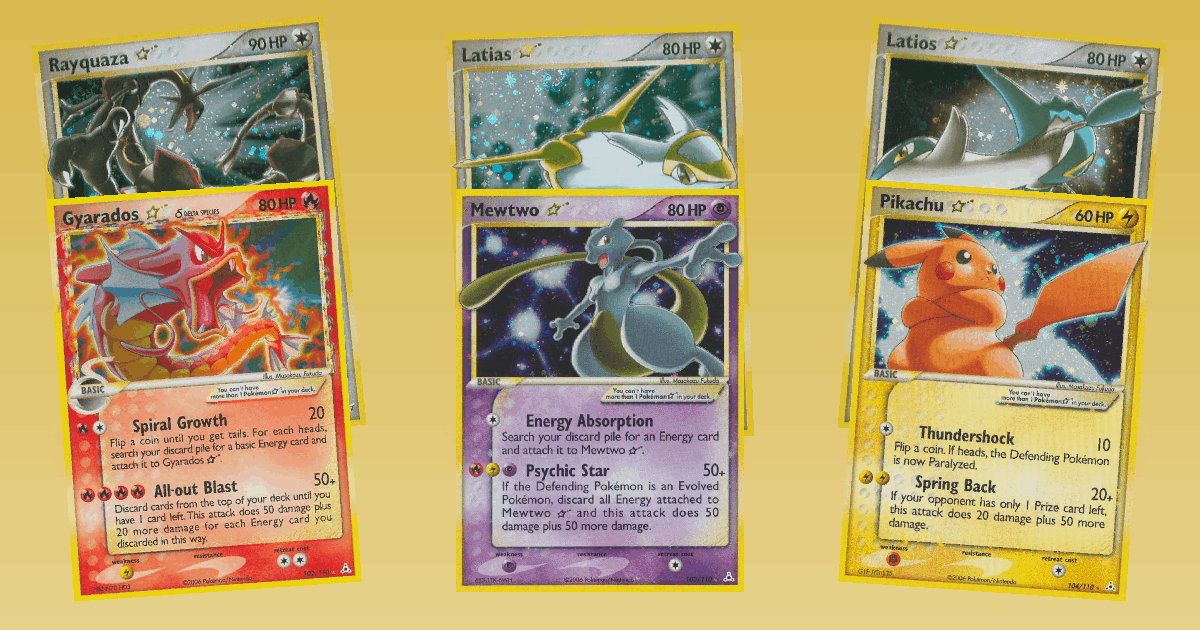
The pinnacle of rarity: Pokémon that were both Shiny AND Delta Species.
Collector Value & Rarity
Delta Species cards are highly collectible due to their unique "metal" frame aesthetic and the nostalgia for the EX era (2005-2006). Reverse Holo versions are particularly prized because the Holon Phantoms set stamp often appeared in gold foil on the art.
The Gold Star Delta cards are the holy grails, with Gyarados Star and Charizard Star (Dragon Frontiers) commanding prices in the thousands. Even regular Rare Holo Delta species in mint condition can fetch $50-100 due to the difficulty of grading these foil-heavy cards.
All cards in this guide
| Card | Set | Rarity | Released | |
|---|---|---|---|---|
 | Armaldo δ #1 | Holon Phantoms | Rare Holo | 2006 |
 | Cradily δ #2 | Holon Phantoms | Rare Holo | 2006 |
 | Deoxys δ #3 | Holon Phantoms | Rare Holo | 2006 |
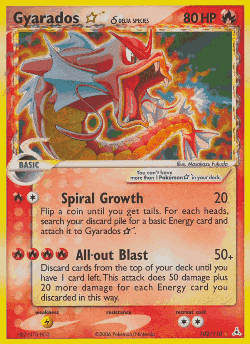 | Gyarados ☆ δ #102 | Holon Phantoms | Rare Holo Star | 2006 |
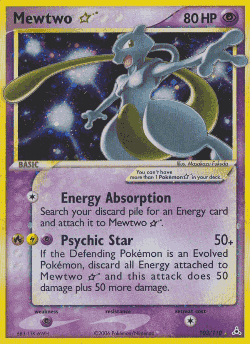 | Mewtwo ☆ #103 | Holon Phantoms | Rare Holo Star | 2006 |