 Pooka
Pooka
Breaking the Borders
Introduced in the EX Team Rocket Returns set (November 2004), Gold Star Pokémon represented a significant departure from standard card design. For the first time, the artwork wasn't confined to the illustration box: character limbs, tails, and effects burst out of the frame, creating a dynamic 3D effect that made the Pokémon feel larger than life.
But specific design choices made them even more special: every Gold Star card depicted the Pokémon in its "Shiny" (alternate color) form, marking the first time shiny Pokémon were systematically featured as a specific rarity type since the "Shining" cards of the Neo era. The combination of dynamic formatting and shiny coloration made them instantly recognizable.
The Rule of One
Gold Star cards weren't just pretty faces. They came with a strict gameplay restriction printed right on the card: "You can't have more than 1 Pokémon ☆ in your deck." unlike the standard rule of four, or even the "one per species" rule for later mechanics.
This limitation (similar to the "Ace Spec" mechanics of later years) was necessary because their attacks were often exceptionally powerful or disruptive for Basic Pokémon. However, due to their extreme rarity, few players could actually afford to run them in competitive decks, keeping them primarily in the domain of collectors.
The Hoenn Legends
Some of the most iconic Gold Star cards feature the legendary dragons of the Hoenn region, known for their stunning artwork and immense value.
The Delta Species Era
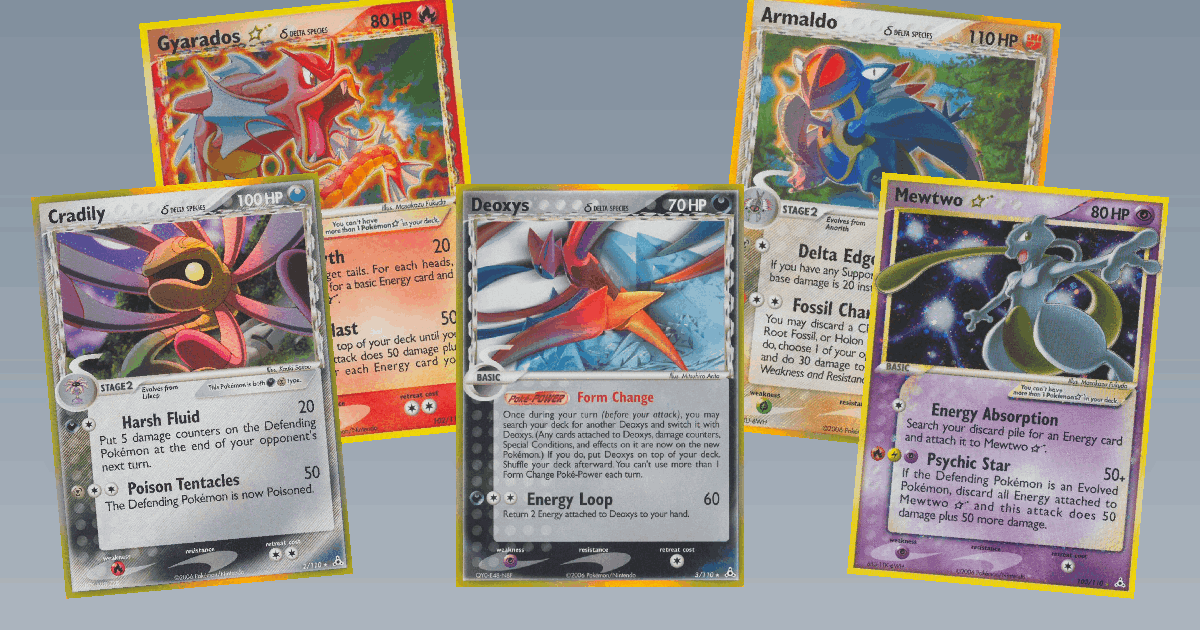
As the EX era evolved, Gold Star cards began to intersect with the "Delta Species" mechanic. These Pokémon had different types than usual (e.g., a Water-type Mewtwo or Fire-type Gyarados) due to electromagnetic waves in the Holon region lore. This layered two gimmicks onto a single card: they were Shiny, they were Delta Species, and they were Gold Stars.
This era produced some of the most visually complex cards in history, with the "metal" frame aesthetics of Delta Species cards combining with the shiny Pokémon color palettes.
Delta Species Gold Stars
When the Gold Star mechanic met the Holon region's Delta Species phenomenon.
Collector Value & Rarity
Gold Star cards are universally considered "grail" items. Their extreme rarity (pull rates of ~1 per 72 packs) combined with the fragility of old foil cards means pristine copies are incredibly scarce.
The most valuable card is undoubtedly Rayquaza Star from EX Deoxys, which can fetch over $40,000 in PSA 10 condition. Even raw, played copies of Gold Stars typically start at $200-300, with popular Pokémon like Charizard, Mewtwo, and the Eeveelutions commanding significantly higher prices. For many collectors, simply owning one is a crowning achievement.
A Lasting Legacy
The Gold Star era ended with the EX Power Keepers set in 2007, but its impact remains undeniable. In modern collecting, "Gold Star" is synonymous with "Grail." High-grade copies of Rayquaza Star or Umbreon Star (from POP Series 5) regularly fetch tens of thousands of dollars at auction.
The mechanic has been spiritually succeeded by "Radiant" Pokémon in the Sword & Shield era, which also feature shiny Pokémon with a "one per deck" limit, keeping the memory of the original Gold Stars alive for a new generation.
All cards in this guide
| Card | Set | Rarity | Released | |
|---|---|---|---|---|
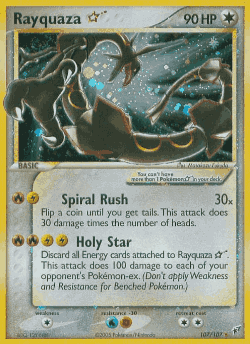 | Rayquaza ☆ #107 | Deoxys | Rare Holo Star | 2005 |
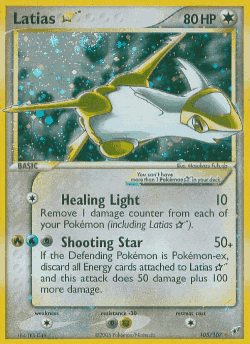 | Latias ☆ #105 | Deoxys | Rare Holo Star | 2005 |
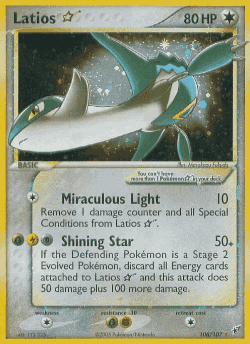 | Latios ☆ #106 | Deoxys | Rare Holo Star | 2005 |
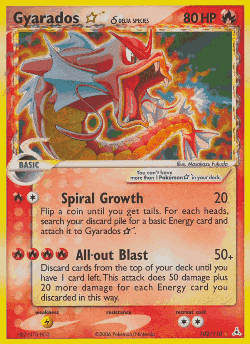 | Gyarados ☆ δ #102 | Holon Phantoms | Rare Holo Star | 2006 |
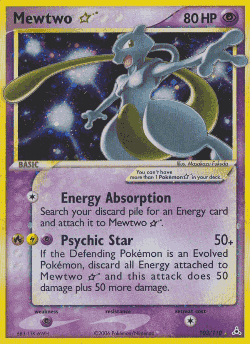 | Mewtwo ☆ #103 | Holon Phantoms | Rare Holo Star | 2006 |
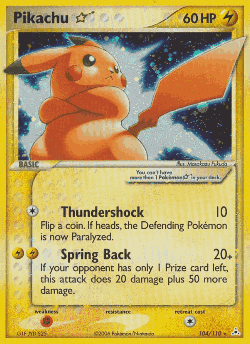 | Pikachu ☆ #104 | Holon Phantoms | Rare Holo Star | 2006 |
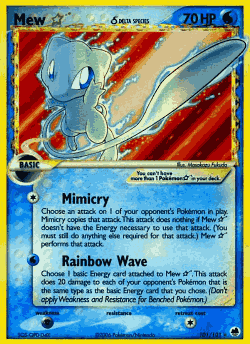 | Mew ☆ δ #101 | Dragon Frontiers | Rare Holo Star | 2006 |